

For a single small plane, it’s easy to design a small building and door combination that works without breaking the bank, you can use low cost bifold or hydraulic tilt-up doors. Simple square building design typically requires little consideration of door loading or space requirements.
However, for hangars with larger openings (80 ft. or more) that can accommodate multiple nested aircraft, the typical bifold and tilt-up small door design doesn’t scale and larger more flexible sliding doors are required. In larger hangars the oversized door frames, hinges, and lifting mechanisms have forces that grow exponentially with size – raising costs and engineering complexity not just for the door but for the entire building envelope.
And for multi-aircraft hangars where daily operations are more intensive and complex, metal sliding or sectional doors are generally preferred. They span greater widths and when designed properly, allow for highly efficient operations – enabling individual aircraft to move in or out without requiring every door section to open. (For the record, fabric doors can usually do the job, but they are generally more expensive.)
At Spec-Dor, we specialize in the five key areas that make these large door systems possible:
Segmented Door Panels
Independent Drive Systems
Track & Guide Infrastructure
Control & Safety Systems
Structural Reinforcement
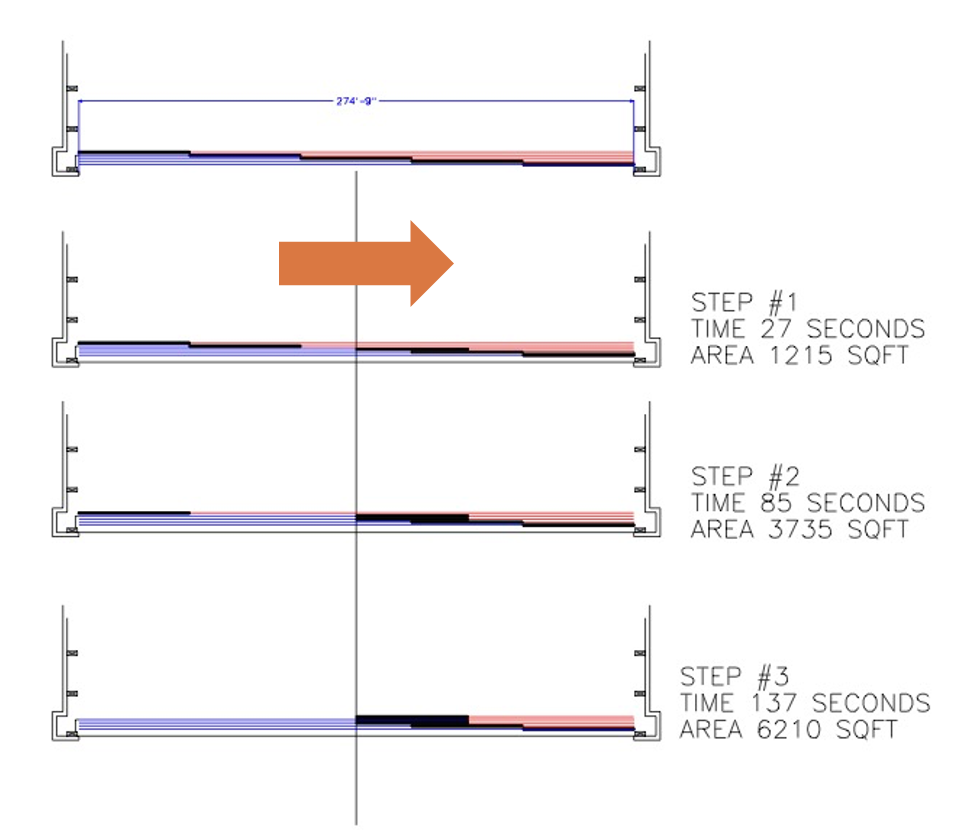
Here’s an example of a Spec-Dor hangar door solution that was specifically designed for optimal efficiency. The original proposal (not from Spec-Dor) had an expensive ten section design with motors on the sections at opposite ends. Getting the maximum opening was a complicated affair that required stacking the door sections in the middle and then shifting them to one side. Spec-Dor proposed half the number of sections, making them all motorized and controllable for a final cost that was less than the original 10 section design.
Up to ~48 feet wide: Bifold doors are typically a practical, efficient solution.
80 feet wide or more: Bottom rolling (sliding) doors are generally the better choice, especially in professional, high-cycle operating environments.
Between these ranges, factors such as climate, building structure, and usage frequency become decisive.
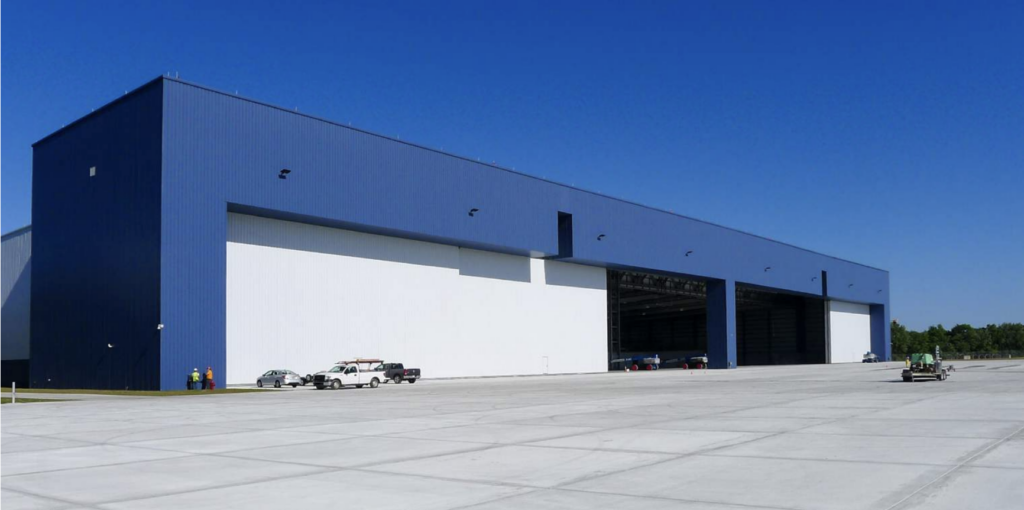
For wide openings and frequent operations, bottom rolling doors are the industry standard.
Pros
Con
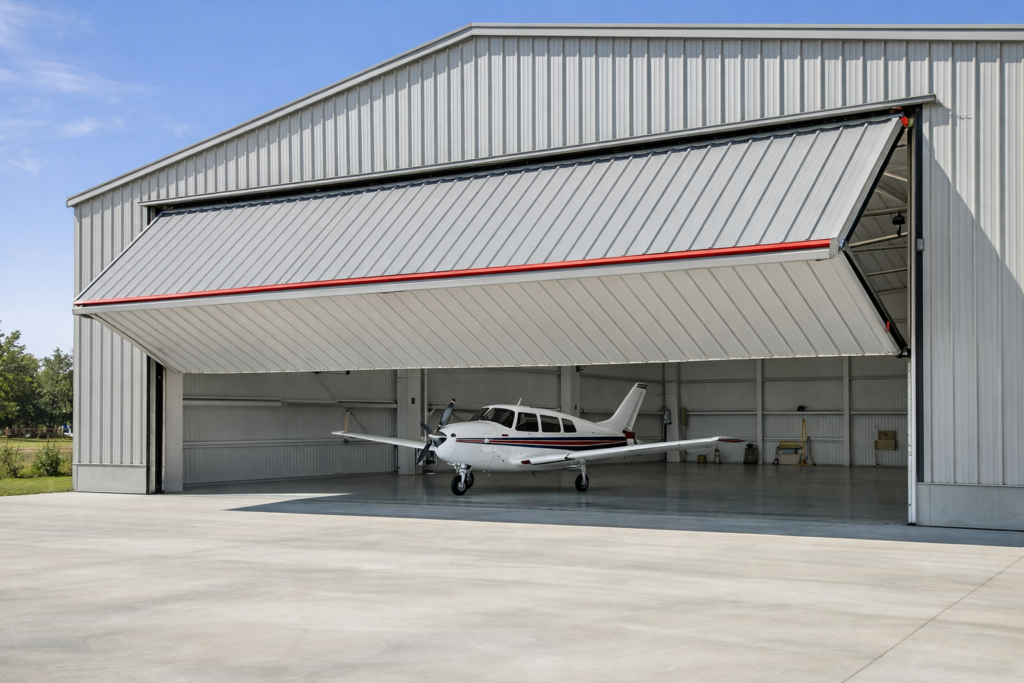
Bifold doors remain effective within defined size limits.
Pros
Cons
Conclusion
As a general rule, bifold doors work well for hangars up to 48 feet wide, while bottom rolling doors dominate at 80 feet and beyond—particularly where high-frequency, professional operations demand reliability and scalability.

Spec-Dor Aircraft Hangar Doors
Typically replies within 12 to 24 hours
Are there any questions you have? How may we assist you?
WhatsApp Us
🟢 Online | Privacy policy
WhatsApp us