
Whether to retrofit or rebuild an aircraft hangar begins with assessing structural integrity and long-term operational goals. The hangar door manufacturer sees the physical planning and execution of both approaches first-hand across many projects, locations, and hangar uses. Based on that high level view, this page outlines the critical considerations for aviation facility owners weighing an extensive hangar retrofit.
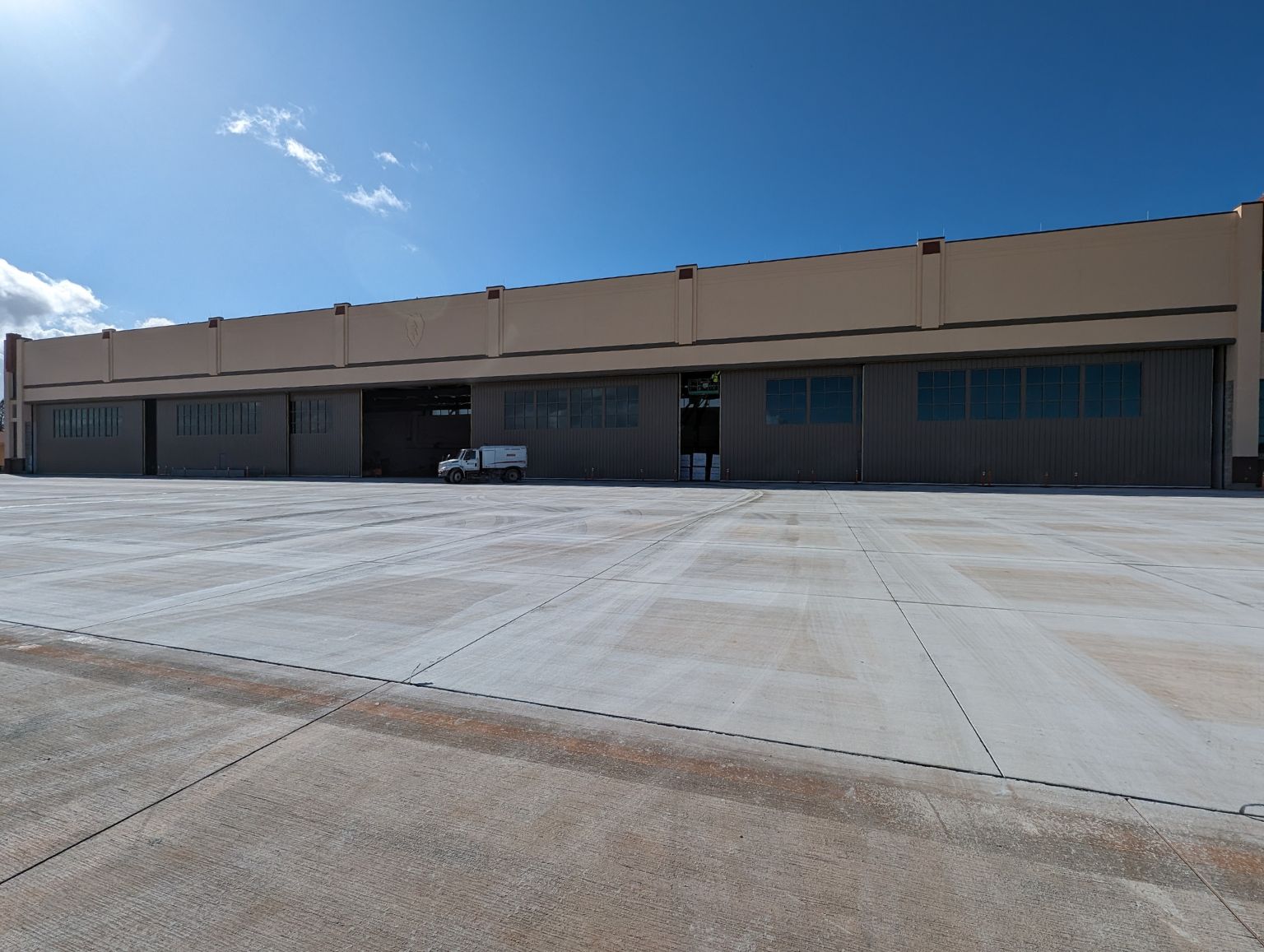
The “clean slate” pitfall is more common than one might think. Upgrading rather than starting from scratch has a lot going for it if the situation fits. With a structurally sound hangar envelope, improvements to the building and a completely new hangar door system result in an essentially new hangar, at a savings of 30-40% (or more) over new construction. Psychologically, it may feel good to sweep away the old and start fresh, but that can be a costly business trap.
On the other hand, building a new hangar has advantages built into in the ground-up design process. Design for optimal workflows, advanced systems like integrated HVAC and fire suppression, and easy future scalability to handle fleet growth or multi-purpose uses, can all be seamlessly integrated. Total cost of ownership over 20-30 years can shift the math further, when factoring in aspects like savings through purpose-built energy efficiency , and no chance of surprises from aging structures. What-ifs and efficiency differences between retrofit upgrades and fresh construction may tilt in favor of rebuild, even after significant upfront retrofit savings.
Financing paths can also differ sharply between retrofit and rebuild. Retrofitting can tap phased maintenance budgets, while rebuilds have access to larger capital financing, and there may be different tax credits and grants for each approach.
Here is an outline of the case for hangar retrofits, against which new construction advantages can be balanced.
It’s the door system that turns a large building into a functioning aircraft hangar. The ability to move an entire wall—reliably, quickly, and safely—is the defining operation. A well-designed door system is the core mechanism that determines how effectively the hangar performs. Provided that space and clearance requirements are met—including sufficient interior height, width, and footprint for current and future aircraft—all that’s required of the rest of the building is that it is structurally sound.
Many old hangars were built strong, and can reliably handle the next few decades with targeted reinforcement. A structural review identifies what’s solid and what needs attention. Assessing fire, safety, and building code compliance, and permitting and regulatory requirements, can also uncover significant cost hurdles. In cases where the structure is reliable, and compliance issues are manageable, retrofitting is a practical path to consider, in terms of cost, speed, and minimal downtime.
Once structure, compliance, and door system are addressed, additional upgrades can add real value: offices, workshops, lighting, storage, HVAC, and electrical systems. These can be tailored to new aircraft requirements and modern standards. They’re low-disruption improvements that modernize function without major downtime. Expansion of overall hangar area, building on the existing structure, may also be an option.
A new door system brings significant functional gains—operations run smoother with faster cycles, reduced maintenance, increased energy efficiency, and improved working conditions. Modern systems also support newer aircraft profiles, enhancing the hangar’s long-term utility.
A hangar retrofit strategy keeps downtime to a minimum, reducing several months of shutdown to several weeks. In some circumstances, retrofitting can be executed without a complete facility closure. Work can often proceed with phased interruptions, while overall operations continue, which makes a measurable difference to continuity and cost control. Plus, structure reuse can also avoid long permitting delays.
Upgrading an existing hangar carries forward more than steel and concrete. It preserves continuity—of site, process, and investment. There’s value in keeping a well-built structure in service. Improving what already works can reflect both business logic and historical preservation.
At Spec-Dor, we bring 50+ years of engineering experience to aircraft hangar retrofits and new builds of all sizes, including zero-shutdown retrofitting. Consider our competitive advantages!
© 2026 SPEC-DOR AIRCRAFT HANGAR DOORS. All Rights Reserved.

Spec-Dor Aircraft Hangar Doors
Typically replies within 12 to 24 hours
Are there any questions you have? How may we assist you?
WhatsApp Us
🟢 Online | Privacy policy
WhatsApp us