Making of an Aircraft Hangar Door

This page goes beyond photos of welding heavy steel to look at the six stages of building a wide-span bottom-rolling hangar door system: design, engineering, manufacturing & shipping, installation, commissioning & handover, and long-term operation. Each stage involves distinct considerations and decisions, and apply to fabric doors as well.
(All photos are Spec‑Dor projects and representative of industry standards and best practices.)

Design

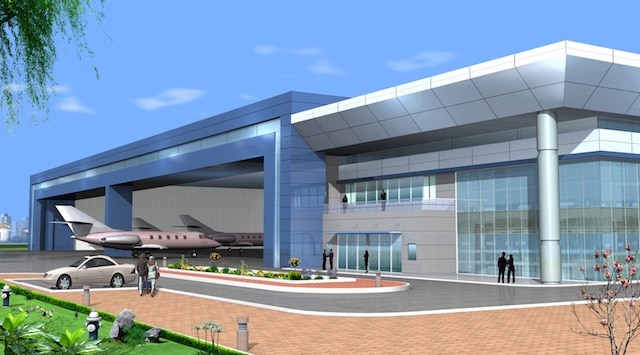
Design occurs when specifications are still fluid and feature lock-in hasn’t yet occurred. From a hangar door perspective, beginning the design phase as early as possible—in collaboration with the architect, client, and operator—allows consideration of myriad factors, including the building envelope, location, site conditions, climate, aircraft mix, workflow, and budget. Door-centric analysis routinely uncovers overlooked needs, and many factors interrelate. For example, aircraft type influences the number of door panels, which affects operational efficiency, as well as heating and cooling loads.

Rizon Jet,
Architectural rendering: 320ft (97.4m) hangar door spanning two bays with permanent external column division. (Doha, Qatar)

Engineering

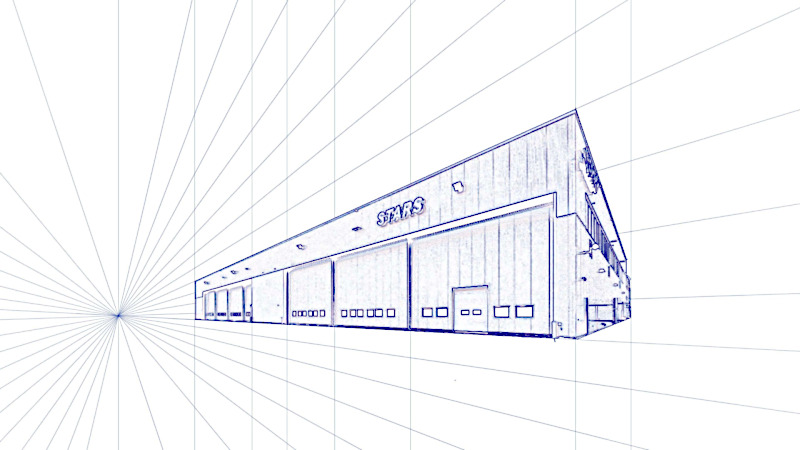
This is where specifications are locked into reality. Hangar door-specific experience informs the choice of materials, components, and tolerances. Code compliance (e.g. wind, seismic, snow loads) is met or exceeded. Constructability is factored in with modular sections for standardized shipping and straightforward end-point assembly. Final blueprints are supplied to architects and contractors.
Architectural drawing
Design specifications translate into engineering blueprints.

Manufacturing & Shipping

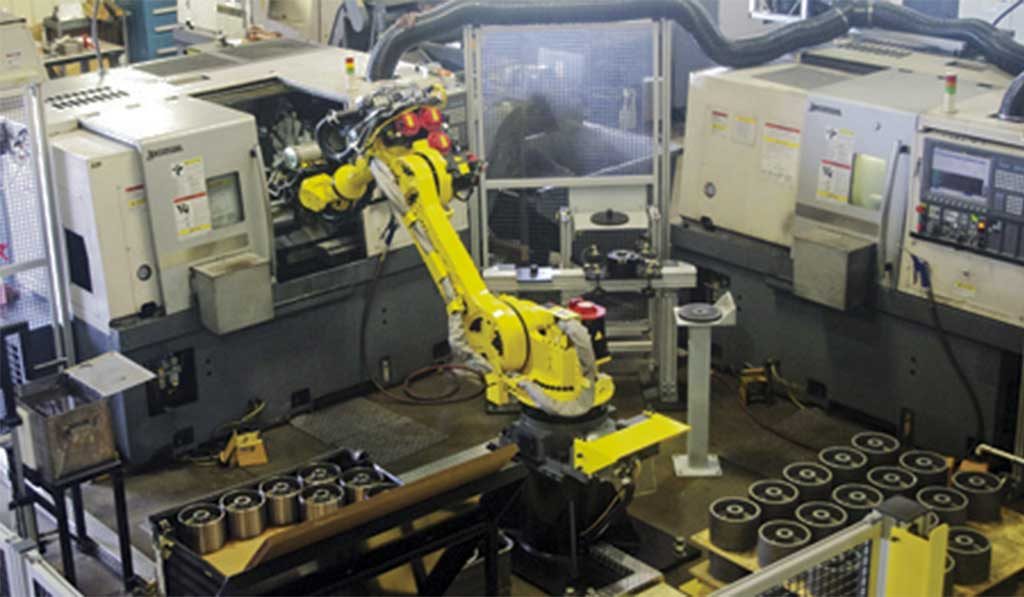
Modern hangar door systems require custom manufacturing facilities for quality control. Specialized machinery, expert teams, and established subcontractor networks (e.g. galvanizing) maintain precision that on-site construction can’t practically match.  Cost-effective shipping of ready-to-assemble doors over long distances relies on modular design and logistics experience.

Spec-Dor precision manufacturing
Custom hangar door manufacturing facility. (Quebec,Canada)

Installation

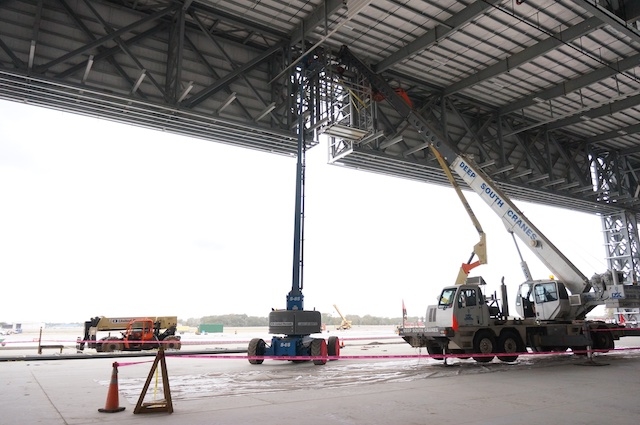
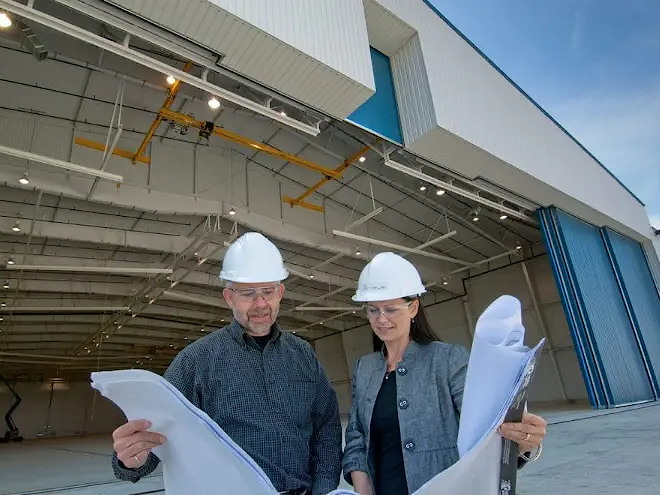
Installation is as critical as design, engineering and manufacture. Errors at this stage can compromise a structurally impeccable hangar door. Contractors typically involved, depending on metal or fabric door type, include general, structural, concrete, plumbing, electrical, and others. Scheduling requires well-choreographid timing and sequencing. Unpredictables like weather and minor snafus and delays have to be worked around without introducing errors. Critical procedures like track installation and door alignment require expert oversight.

Installation: ST engineering (Florida, USA)
Installation of a 600ft x 50ft (183m x 15m) hangar door system. (Florida, USA)

Commissioning & Handover

A victory lap of sorts: testing every function and feature, making sure the client is operationally up to speed, then handing over the keys. In this stage, fine-tuning adjustments can be made to things like the control systems. Operator training is provided, including door capabilities, controls, and scheduled maintenance. A complete owner’s documentation package includes manuals, certifications and warranties, emergency procedures, and a critical-contacts list.

CEO Alexander Timoschuk on the job
Post-construction handover: testing, training, and documentation contribute directly to smooth, reliable long-term operation.

Long-term Operation

Reliable operation over years and decades is the final stage of the hangar door life cycle. Smooth maintenance comes from clearly established schedules and procedures (delivered during handover), and easy servicing access to door components, since poor design can bury key assemblies and require significant dismantling to reach. Comprehensive documentation and prompt manufacturer support simplify parts replacements, repairs, and upgrades for evolving conditions or new technologies. These outcomes are defined early, during an effective design and specification process.
 
 
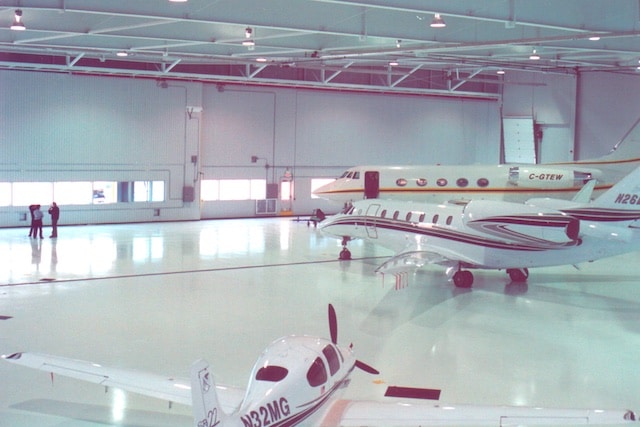
Business aviation service in action: Spec-Dor
Business aviation in action: Mixed-fleet hangars with tailored multi-panel door systems allow precise and flexible partial openings, for faster aircraft access and reduced thermal loss (Toronto, Canada).